If you are researching copper peptides in Canada, you may be comparing topical skin care, hair and scalp products, GHK-Cu research and where these products can legally be purchased.
Copper peptides are small copper-binding peptides used mainly in topical skin and hair-care products, while injectable copper peptide products fall under a very different Canadian regulatory framework.
What Are Copper Peptides?
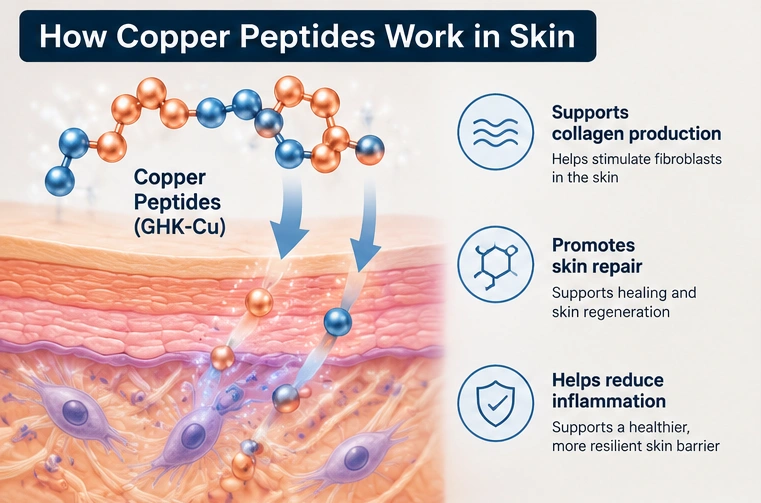
Copper peptides are peptide molecules that bind copper ions. The best-known example is GHK-Cu, a copper complex of the naturally occurring tripeptide glycyl-L-histidyl-L-lysine (GHK). GHK has a strong affinity for copper and has been studied in tissue remodelling, skin biology and repair processes.
In cosmetic products, you may see copper peptide ingredients identified using an INCI ingredient name such as Copper Tripeptide-1. Product type, route of administration and Canadian regulatory classification matter.
Copper Peptides vs GHK-Cu
GHK-Cu is one specific copper peptide and is the form most often discussed in peptide research and skin-care products. The term “copper peptides” is broader and may be used for more than one copper-binding peptide ingredient.
Read our dedicated GHK-Cu peptide guide for research on that specific compound.
Why Are Copper Peptides Used in Skin Care?
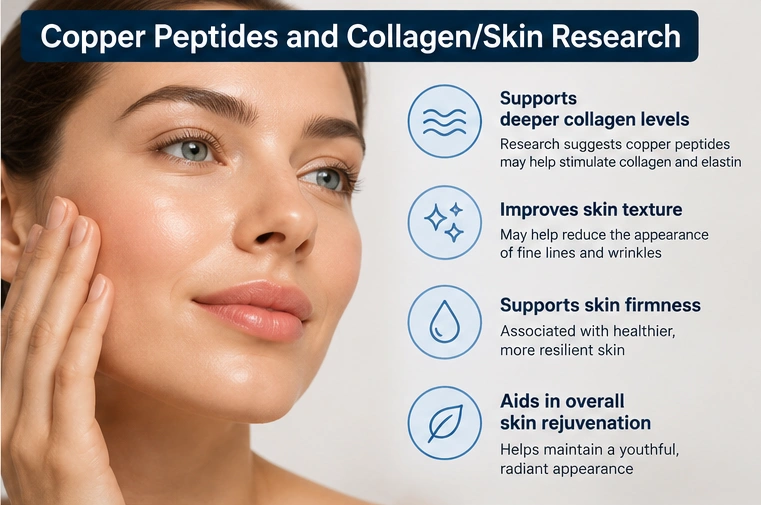
Research on GHK and GHK-Cu has examined processes involved in tissue remodelling, fibroblast activity, collagen and elastin production, inflammation and skin repair. Much of the mechanistic evidence comes from laboratory and preclinical research.
A recent review of topical GHK noted that GHK-Cu is widely used in anti-wrinkle cosmetic products, but published information on skin permeability and clinical effectiveness remains limited.
What Does Human Research Show?
Human clinical evidence is much smaller than the volume of laboratory research may suggest. Small clinical studies have examined topical GHK-Cu, but the evidence base is not strong enough to treat laboratory findings as guaranteed cosmetic outcomes.
Copper Peptides and Hair Research
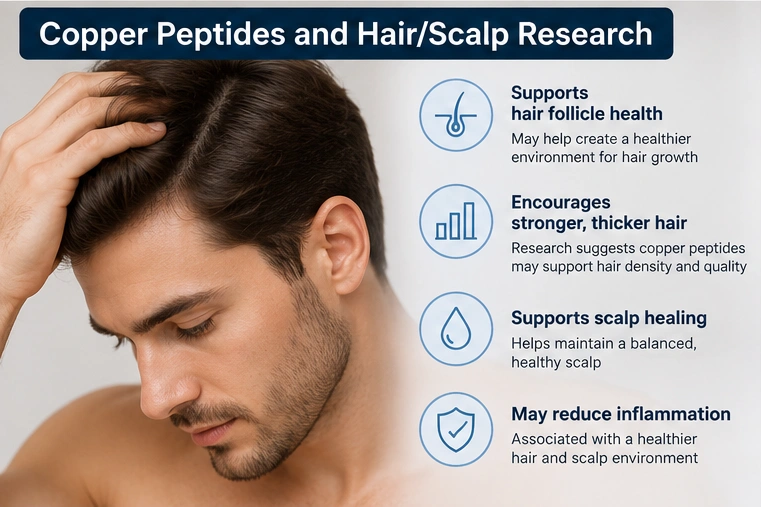
GHK-Cu has also been discussed in research involving hair follicles and tissue biology. Laboratory and review literature has reported biological activity involving follicle and repair pathways. That does not establish that every copper peptide serum will prevent hair loss or regrow hair in people.
Are Copper Peptides Legal in Canada?
The answer depends on the finished product and how it is sold. Cosmetics sold in Canada must comply with the Food and Drugs Act and Cosmetic Regulations. Health Canada requires cosmetic ingredients to be disclosed and uses its Cosmetic Ingredient Hotlist to identify ingredients that are prohibited or restricted.
This does not mean that every product labelled GHK-Cu is legal for every use. Health Canada specifically identifies injectable GHK-Cu among unauthorized injectable peptide drugs found on the Canadian market. Injectable peptides are regulated as prescription drugs and must be authorized before they can legally be sold as drug products.
A “research use only” label does not make an unauthorized injectable peptide legal or exempt it from Canadian requirements.
Buying Copper Peptide Products in Canada
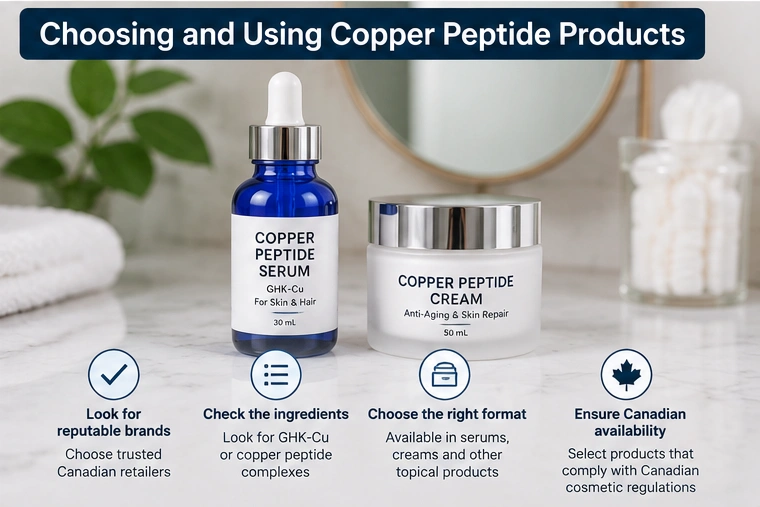
For topical products, check the full ingredient list, directions, seller identity and intended use. Look for a clearly labelled topical serum, cream or scalp product rather than an injectable vial or bulk peptide powder.
When comparing Canadian sellers, look for clear contact information, transparent product labels and realistic cosmetic claims. A Canadian website or domestic shipping address alone does not establish that a product complies with Canadian requirements.
Looking for Copper Peptides in Canada?
Tell us what type of topical copper peptide product you are looking for. Peptides Canada can use your request to help identify relevant Canadian options as our product directory grows.
Safety and Considerations
Follow the directions provided with topical cosmetic products and stop using a product if you develop a concerning reaction. People with skin conditions or questions about combining active skin-care ingredients can discuss the product with a healthcare professional.
Injectable GHK-Cu should not be treated as equivalent to a topical copper peptide cosmetic. Health Canada advises Canadians not to buy or use unauthorized injectable peptide drugs.
Copper Peptides Canada FAQ
Are copper peptides the same as GHK-Cu?
No. GHK-Cu is a specific copper-binding tripeptide. “Copper peptides” is a broader term that can refer to copper-binding peptide ingredients.
Can you buy copper peptide skin care in Canada?
Topical products containing copper peptide ingredients are sold in Canada. The finished cosmetic still needs to meet Canadian safety, ingredient and labelling requirements.
Are injectable copper peptides legal to buy online in Canada?
Health Canada regulates injectable peptides as prescription drugs and has specifically identified GHK-Cu among unauthorized injectable peptide products found on the Canadian market.
Do copper peptides increase collagen?
Laboratory and preclinical research has reported effects involving collagen production and tissue remodelling. Human clinical evidence for cosmetic outcomes is more limited.
Are copper peptides used for hair?
Copper peptides appear in some hair and scalp products, and GHK-Cu has been studied in biological pathways related to hair follicles. Evidence for specific hair-growth outcomes in people remains limited.
Sources and Further Reading
- Health Canada: Cosmetic Ingredient Hotlist
- Health Canada: Cosmetic advertising, labelling and ingredients
- Health Canada: Unauthorized injectable peptide drugs
Research Copper Peptides Before You Buy
For Canadians, the key distinction is the type of product. A topical cosmetic containing a copper peptide is not the same regulatory category as an injectable GHK-Cu vial. Check the product label, intended use and seller information, and use Canadian regulatory sources when evaluating health-related claims.
If you are considering a medical peptide treatment rather than a topical cosmetic, find a peptide or GLP-1 provider in Canada to discuss your options with a healthcare professional.